A hidden water leak is one of the most costly plumbing problems a Sydney homeowner can face. Unlike a burst pipe that makes itself immediately obvious, a slow leak inside a wall, under a slab, or underground can go undetected for months. By the time it is discovered, the damage to walls, flooring, and foundations can be extensive.
Knowing the warning signs early gives you the best chance of catching a leak before the repair bill becomes significant. Here are the seven most common signs, plus a simple DIY meter test you can do right now.
7 Signs You May Have a Hidden Water Leak
1. A Water Bill That Has Jumped Without Explanation
Your water usage habits have not changed, but your Sydney Water bill has increased noticeably. A continuous drip from a concealed pipe can waste thousands of litres per month. Comparing your current bill to the same quarter last year is a quick way to spot an anomaly. An increase of 20% or more with no obvious cause is a strong indicator of a hidden leak.
2. Damp or Discoloured Walls and Ceilings
Water stains, yellow-brown discolouration, or soft patches on walls and ceilings often indicate a pipe leak above or behind the surface. In Hills District homes with second storeys, a leak in an upstairs bathroom or laundry can appear as a ceiling stain in the room below. Do not assume a stain is from an old problem. Check whether it is growing or getting darker.
3. Mould in Unexpected Places
Mould needs moisture to grow. Finding mould on a wall that is not near a shower or bath, or inside a cupboard with no obvious water source, points to a concealed leak feeding moisture into the building structure. In Sydney's humid climate, mould establishes quickly once moisture is present. It is also a health hazard, particularly for children and people with respiratory conditions.
4. The Sound of Running Water When All Taps Are Off
If you can hear water running inside a wall, or a gurgling sound coming from under the floor when no tap is on, that is a strong sign of a pressurised pipe leak. This sound is more noticeable at night when the house is quiet. Stand near your water meter and listen as well as watching the meter dial.
5. Low Water Pressure Throughout the Home
A sudden and unexplained drop in water pressure at all fixtures, not just one tap, can indicate that water is escaping somewhere in the main supply line before it reaches your fixtures. If pressure has dropped noticeably at the kitchen, bathrooms, and laundry all at once, a supply pipe leak is a likely cause.
6. Wet or Soggy Patches in the Yard
A wet patch in the lawn that persists without rain, particularly along the line between the street water meter and your home, often indicates a leaking underground supply pipe. Grass grows faster and greener over a water leak because of the constant moisture. Similarly, a section of garden bed that stays wet when the rest dries out is worth investigating.
7. Cracks in the Slab or Foundation
In slab-on-ground homes, which are common across Castle Hill and Ryde, a leaking pipe beneath the slab creates moisture that softens the soil underneath. Over time this can cause the slab to move, resulting in cracking in walls and door frames that stick or no longer close properly. This is a serious structural situation that requires both a plumber and potentially a building inspector.
The DIY Water Meter Test
This test takes about 30 minutes and costs nothing.
- Turn off every tap and water-using appliance in the home, including the dishwasher, washing machine, and ice maker. Make sure no one flushes a toilet or uses a tap during the test.
- Locate your water meter. For most Hills District homes it is at the front of the property near the kerb, in a small pit with a lid.
- Write down the exact reading on the meter, including the red digits.
- Wait 30 minutes without using any water.
- Read the meter again. If the reading has changed, water is flowing somewhere it should not be.
If the meter is moving and every tap is off, you have a leak. The next step is to determine whether it is inside or outside the home by turning off the internal isolation valve (usually under the kitchen sink or at the meter itself) and repeating the test.
How Professional Leak Detection Works
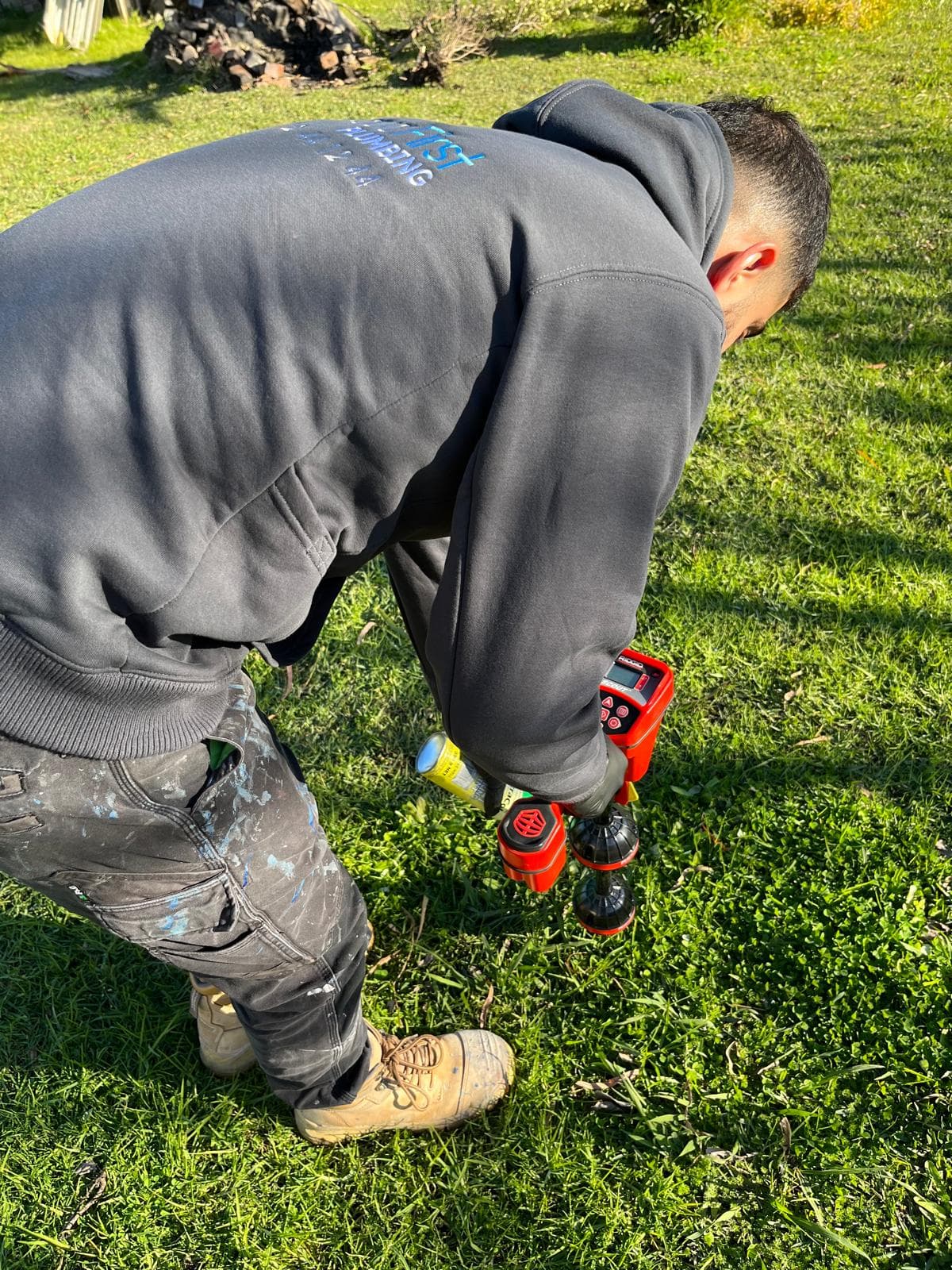
When a leak cannot be found visually or with a meter test, professional detection equipment is used to locate it precisely without opening up walls unnecessarily.
Acoustic leak detection: Specialist listening devices are placed on pipes and the ground surface. The sound of water escaping under pressure is detectable through these sensors, allowing the plumber to identify the leak location accurately.
Thermal imaging: Infrared cameras detect temperature differences in walls and floors. A leaking pipe creates a cooler or warmer zone depending on the water temperature, which shows up clearly on the thermal image.
Tracer gas: For particularly difficult leaks, a safe gas mixture is introduced to the pipe. The gas escapes through the leak point and rises to the surface where a sensor detects it.
These methods mean we can pinpoint a leak to within centimetres before any excavation or wall opening occurs. This saves time, money, and unnecessary damage to your home.
Why Early Detection Saves Money
A leak that costs a few hundred dollars to detect and repair today can cost tens of thousands if left to cause structural damage. Water bills alone from a running leak can add up to several hundred dollars per quarter. More importantly, water damage to timber framing, plasterboard, and insulation creates ideal conditions for mould, which is expensive to remediate and a health risk for your family.
If you have noticed any of the signs above, do not wait. Call Aqua First Plumbing on 0412 441 244 for professional leak detection across Sydney's Hills District, Ryde, and North Shore. Learn more about our leak detection services.