Your hot water system is one of the hardest-working appliances in the house, and one of the most expensive to replace when it finally fails. For Hills District homeowners in Castle Hill, Baulkham Hills, Kellyville, and surrounding suburbs, the question is not just "which brand?" but "which type?" The right choice depends on your household size, energy costs, available connections, and whether you want to take advantage of current NSW rebates.
This guide walks through when to replace rather than repair, the four main system types, what each costs, and how to size a system correctly for your home.
When to Replace vs When to Repair
A hot water system does not last forever. Most storage systems, whether gas or electric, have a useful life of 10 to 15 years. Continuous flow units can last a few years longer with regular servicing. Here are the signs that replacement is the better investment:
- Age: If your system is over 10 years old and has required repairs in the past 12 months, further repairs are likely to follow. You are paying to maintain a declining asset.
- Rust in the water: Rusty or discoloured hot water indicates the tank lining has deteriorated. Once the inner lining fails, the tank itself will follow. This cannot be repaired.
- Frequent pilot light or ignition failures: Repeated failures after repair suggest internal component degradation beyond the single part being replaced.
- Leaking from the tank body: A leak from the base of the tank or from a seam indicates the tank has corroded through. Replacement is the only option.
- Insufficient hot water: If your household has grown or your system can no longer keep up with demand even when functioning correctly, the unit may simply be undersized for your current needs.
- Rising energy bills: An older system works harder to maintain temperature as its efficiency drops. A new unit can reduce hot water energy costs by 30% or more.
The Four Main System Types
Gas Storage
A gas storage system heats and holds a tank of water using a gas burner. These are common in Hills District homes, where natural gas is available in most suburbs.
Pros:
- Faster recovery time than electric (the tank reheats quickly after heavy use)
- Lower running costs than electric storage in most cases
- Works during power outages (older models with standing pilot)
Cons:
- Requires a gas connection and adequate ventilation for the flue
- Standing heat loss from the tank 24 hours a day
- Must be installed outdoors or in a well-ventilated space
Typical cost installed: $1,600 to $2,500 for a 135 to 170 litre unit, depending on brand and installation complexity.
Gas Continuous Flow (Instantaneous)
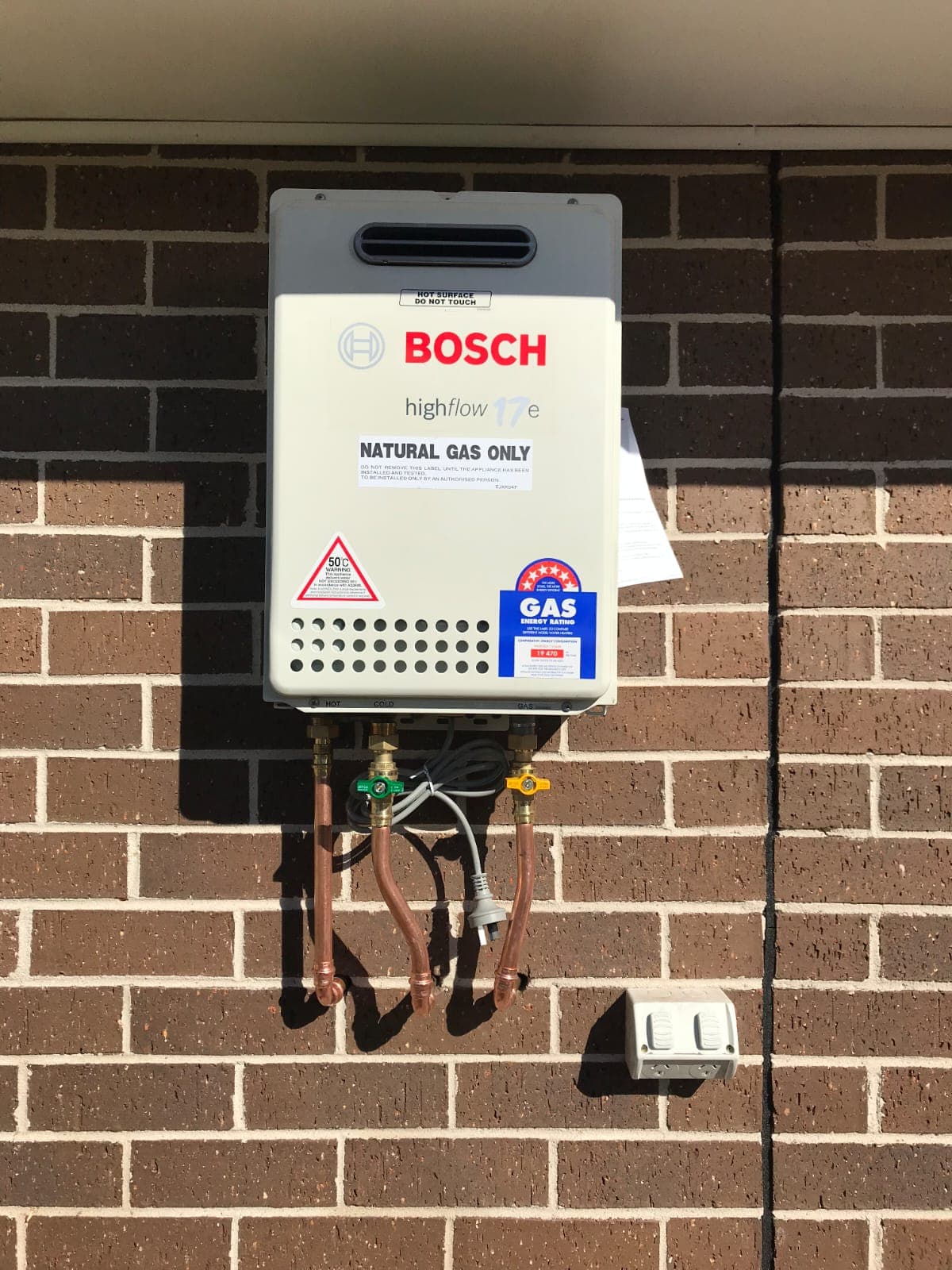
A continuous flow unit heats water on demand as it passes through a heat exchanger. There is no storage tank.
Pros:
- Endless hot water (no tank to run out)
- Compact wall-mounted design saves space
- No standby heat loss since water is only heated when a tap is opened
- Typically lasts 15 to 20 years with servicing
Cons:
- Higher upfront cost than gas storage
- Requires minimum water flow rate to activate the burner
- Simultaneous use of multiple hot water outlets may reduce temperature in smaller units
Typical cost installed: $1,800 to $3,000 depending on capacity (litres per minute) and brand.
Electric Storage
An electric storage system uses one or two immersion elements to heat water in an insulated tank. Many older Hills District homes have these on off-peak (controlled load) electricity tariffs.
Pros:
- Lower upfront cost than gas or heat pump
- No gas connection required
- Simple installation
Cons:
- Highest running costs of all system types unless on off-peak tariff
- Slow recovery time (can take several hours to reheat a full tank)
- Off-peak units only reheat overnight, so if you run out during the day, you wait until the next morning
Typical cost installed: $1,200 to $2,000 for a 250 to 315 litre unit.
Heat Pump
A heat pump extracts warmth from the outside air and uses it to heat water, similar to how a reverse-cycle air conditioner works but in reverse. It uses electricity, but far less than a standard electric element.
Pros:
- The most energy-efficient electric option, using up to 65% less electricity than a standard electric system
- Eligible for significant NSW government rebates (currently up to $1,000 through the NSW Energy Savings Scheme)
- Lower carbon footprint
- Works well in Sydney's climate year-round
Cons:
- Higher upfront cost (partially offset by rebates)
- Generates some noise from the compressor fan, similar to an air conditioning outdoor unit
- Slightly slower heating in very cold weather (below 5 degrees), though this is rarely sustained in the Hills District
- Requires adequate outdoor space for the unit and good airflow around it
Typical cost installed: $3,000 to $4,500 before rebates. After the NSW rebate and any available STCs (Small-scale Technology Certificates), the effective cost can drop to $2,000 to $3,500.
Hills District Considerations
The Hills District has some specific factors that influence which system makes sense for your home:
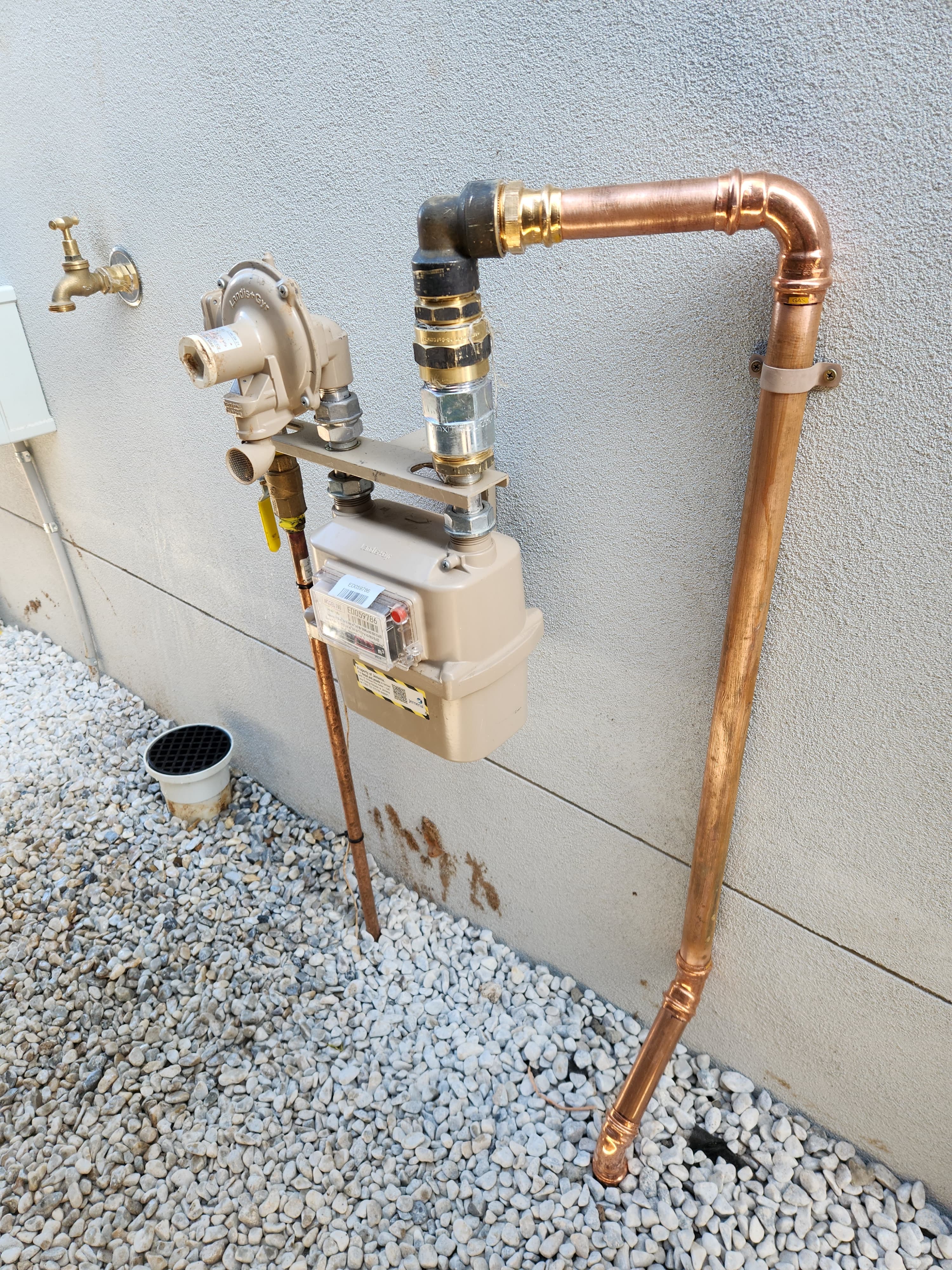
- Gas availability: Natural gas is connected in most established Hills District suburbs including Castle Hill, Baulkham Hills, Bella Vista, Kellyville, and West Pennant Hills. Newer estates in areas like The Ponds and Box Hill may also have gas, but some do not. Check with Jemena (the local gas distributor) if you are unsure about your property.
- Roof space for solar: Hills District homes typically have good roof space and sun exposure, making solar hot water or solar panels to offset a heat pump's electricity use a viable option.
- Climate: Sydney's mild winters mean heat pumps perform well year-round. The Hills District does get cooler overnight temperatures in winter than coastal suburbs, but not cold enough to significantly affect heat pump performance.
- Council regulations: The Hills Shire Council has standard requirements for hot water installations, including placement, drainage of relief valves, and tempering valve compliance. Your plumber handles all of this.
Sizing Guide: Getting the Right Capacity
An undersized system runs out of hot water during peak use. An oversized system costs more to buy and more to run. Use this general guide as a starting point:
- 1 to 2 people: 125 to 160 litre storage, or 16 to 20 litres per minute continuous flow
- 3 to 4 people: 250 to 315 litre storage, or 20 to 26 litres per minute continuous flow
- 5+ people: 315 to 400 litre storage, or 26+ litres per minute continuous flow (or two smaller units)
These figures assume standard usage patterns. If your household takes long showers, runs a bath regularly, or uses a dishwasher and washing machine on hot cycles simultaneously, size up. Your plumber can assess your specific needs during the quote.
Brands Aqua First Installs
We supply and install all major Australian hot water brands:
- Rheem: Australia's most recognised hot water brand. Full range of gas, electric, continuous flow, and heat pump units. Excellent parts availability and warranty support.
- Rinnai: Known for reliable continuous flow units. The B26 and INF26 models are popular choices for Hills District families.
- Bosch: German-engineered continuous flow units with strong build quality. The Bosch Highflow range is a proven performer.
- Dux: Australian-made storage systems. The Proflo range offers good value and is designed for Australian conditions.
We recommend brands based on your situation, not on which brand offers the highest trade margin. The right system is the one that matches your household size, energy source, and budget.
What Happens During Installation
A typical hot water replacement takes half a day. Here is what to expect:
- Disconnect and remove the old unit: We drain the old tank, disconnect gas or electrical supply, and remove the unit for proper disposal.
- Prepare connections: Pipework may need modification to suit the new unit, particularly if you are changing system types (for example, switching from gas storage to continuous flow).
- Install the new unit: The system is positioned, connected to water supply and energy source, and secured in place.
- Tempering valve: NSW regulations require a tempering valve on all new hot water installations. This valve blends hot and cold water to deliver a maximum of 50 degrees Celsius at bathroom taps, preventing scalding.
- Commission and test: The system is started, pressure-tested, and temperature-checked. We run hot water at every outlet to confirm everything is working before we leave.
- Compliance certificate: A plumbing compliance certificate is issued for the installation, and a gas compliance certificate if gas work is involved.
Ready to Replace Your Hot Water System?
If your current system is ageing, inefficient, or has failed, Aqua First Plumbing can help you choose the right replacement and install it the same day in most cases. We carry popular models on our vans for fast turnaround.
Call us on 0412 441 244 for a no-obligation quote, or visit our hot water system services page for more information.