If you live in the Hills District, you live among trees. Castle Hill, Cherrybrook, Dural, West Pennant Hills, and Baulkham Hills are some of the leafiest suburbs in Sydney. Established homes sit on generous blocks with decades-old eucalypts, liquid ambers, jacarandas, and ornamental pears. These trees add character and value to properties, but below ground, their root systems are quietly causing one of the most common and expensive plumbing problems in the area.
Tree root intrusion into sewer and stormwater drains is the number one cause of blocked drains across the Hills District. Understanding how it happens, what to look for, and how to deal with it can save you thousands of dollars in emergency repairs.
Why the Hills District Is Especially Affected
Several factors make Hills District properties more vulnerable to tree root drain damage than many other parts of Sydney:
- Mature tree canopy: Many Hills District suburbs were developed in the 1960s to 1980s. The trees planted when these homes were built are now fully grown with root systems extending well beyond the canopy spread.
- Generous block sizes: Larger properties with established gardens mean more trees and more root activity near underground pipes.
- Older pipe materials: Homes built before the mid-1990s typically have clay or earthenware sewer pipes with cemented joints. These joints deteriorate over time, creating entry points for roots.
- Soil conditions: Parts of the Hills District sit on clay soils that shrink and swell with moisture changes, causing ground movement that can crack pipe joints and create gaps for roots to enter.
How Tree Roots Find and Enter Your Pipes
Tree roots do not randomly punch through solid pipes. They follow moisture. Every sewer and stormwater pipe carries water, and that water produces moisture vapour that escapes through tiny cracks, loose joints, and imperfections in the pipe wall. Roots are extraordinarily sensitive to this moisture and will grow towards it from metres away.
Once a root tip reaches a crack or joint, it enters the pipe. Inside the pipe, it finds everything it needs: water, nutrients, and oxygen. The root grows rapidly in this environment, branching out and thickening. Within months, a single root entry can become a dense mass of fine roots that fills the pipe diameter and catches everything that flows past.
Clay pipes with rubber ring or cemented joints are the most vulnerable. The joints soften and separate over decades, providing an easy path for root entry. Even modern PVC pipes are not immune if a joint was not properly glued during installation or if ground movement has shifted a connection.
Types of Damage Tree Roots Cause
Partial Blockage
In the early stages, roots create a partial obstruction. Water still passes through, but slowly. You may notice drains taking longer to empty or toilets flushing less forcefully. At this stage, the problem is relatively simple to clear, but it will return if the root entry point is not addressed.
Full Blockage
Left unchecked, roots fill the pipe completely. Waste and water have nowhere to go and back up into the lowest fixture in the home, usually a ground-floor toilet, shower, or floor waste. A full blockage is unpleasant, unhygienic, and often happens at the worst possible time.
Pipe Cracking and Collapse
As roots grow thicker inside a pipe, they exert pressure on the pipe wall. Clay pipes can crack under this force, and sections can collapse entirely. A collapsed sewer line requires excavation and pipe replacement, which is significantly more expensive than clearing a root blockage from an intact pipe.
Displaced Joints
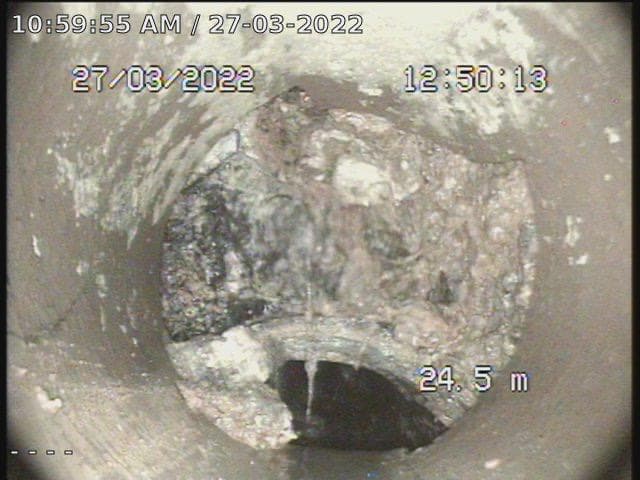
Root growth between pipe sections can push joints apart, creating misalignment. Water leaks into the surrounding soil, which attracts more roots and accelerates the damage. Displaced joints show clearly on CCTV footage as offsets where one pipe section no longer lines up with the next.
Warning Signs of Tree Root Drain Damage
Watch for these indicators, particularly if your home has mature trees within 10 metres of the sewer or stormwater line:
- Slow-draining fixtures: Sinks, showers, and baths that drain slowly despite being free of hair and debris at the plug hole.
- Gurgling sounds: Air trapped by a partial blockage escaping through drain openings. This is especially noticeable when a toilet is flushed or a washing machine drains.
- Recurring blockages: A drain that blocks, gets cleared, and blocks again within a few months is almost certainly affected by root intrusion. The roots regrow after each clearing unless the entry point is sealed.
- Sewage smell: A persistent sewage odour from drains, inspection pits, or in the yard indicates waste sitting in the line rather than flowing freely.
- Unusually green or lush grass: A patch of lawn that is noticeably greener and grows faster than the surrounding grass may be fed by a leaking sewer pipe below. The nutrients in wastewater are effective fertiliser.
- Sinkholes or soft spots in the yard: Water escaping from a cracked pipe saturates the soil above it, creating soft, spongy areas or small depressions in the ground.
How CCTV Drain Inspection Finds the Problem
The only reliable way to confirm tree root damage, locate the entry point, and assess the condition of the pipe is a CCTV drain inspection. A small waterproof camera on a flexible cable is fed through the drain from an access point, typically an inspection pit or cleanout opening.
The camera sends a live video feed to a monitor, showing the interior of the pipe in real time. The plumber can see exactly where roots have entered, how extensive the growth is, whether the pipe is cracked or displaced, and the condition of the pipe upstream and downstream of the damage.
The footage is recorded and can be shown to you on-site. This transparency means you understand the problem fully before any repair decisions are made. It also provides a record that can be referenced for future inspections or insurance purposes.
Repair and Treatment Options
Hydro Jetting
For root blockages in pipes that are otherwise structurally sound, hydro jetting is the most effective clearing method. A high-pressure water jet at up to 4,000 PSI cuts through the root mass and flushes it out of the pipe. This restores the full diameter of the pipe and provides a clear view for the CCTV camera to inspect the pipe condition after clearing.
Mechanical Root Cutting
In some cases, a mechanical root-cutting head attached to a drain machine is used to slice through heavy root masses before hydro jetting cleans the pipe walls. This is common when roots have been growing unchecked for years and formed a dense plug.
Patch Repair
If CCTV inspection reveals a localised crack or joint failure at the root entry point, a patch repair can seal the opening without excavating the entire pipe run. This is a targeted fix that prevents root re-entry at that specific location.
Pipe Relining
For pipes with multiple entry points, widespread joint deterioration, or recurring root problems, pipe relining creates a new pipe within the old one. A resin-saturated liner is inserted into the existing pipe and inflated to conform to the pipe walls. Once cured, it forms a smooth, jointless pipe that roots cannot penetrate. Relining avoids the disruption and cost of full excavation and is typically guaranteed for 50 years.
Prevention Strategies
Complete prevention is difficult when mature trees are close to drain lines, but these measures reduce the risk significantly:
- Schedule regular CCTV inspections: Every two to three years for properties with large trees near the sewer line. Early detection means simpler, cheaper treatment.
- Install root barriers: Physical barriers made from high-density polyethylene can be installed between trees and pipe runs to redirect root growth away from vulnerable areas.
- Consider tree placement: When planting new trees, check where your sewer and stormwater lines run and plant well away from them. Your plumber or council can help identify pipe locations.
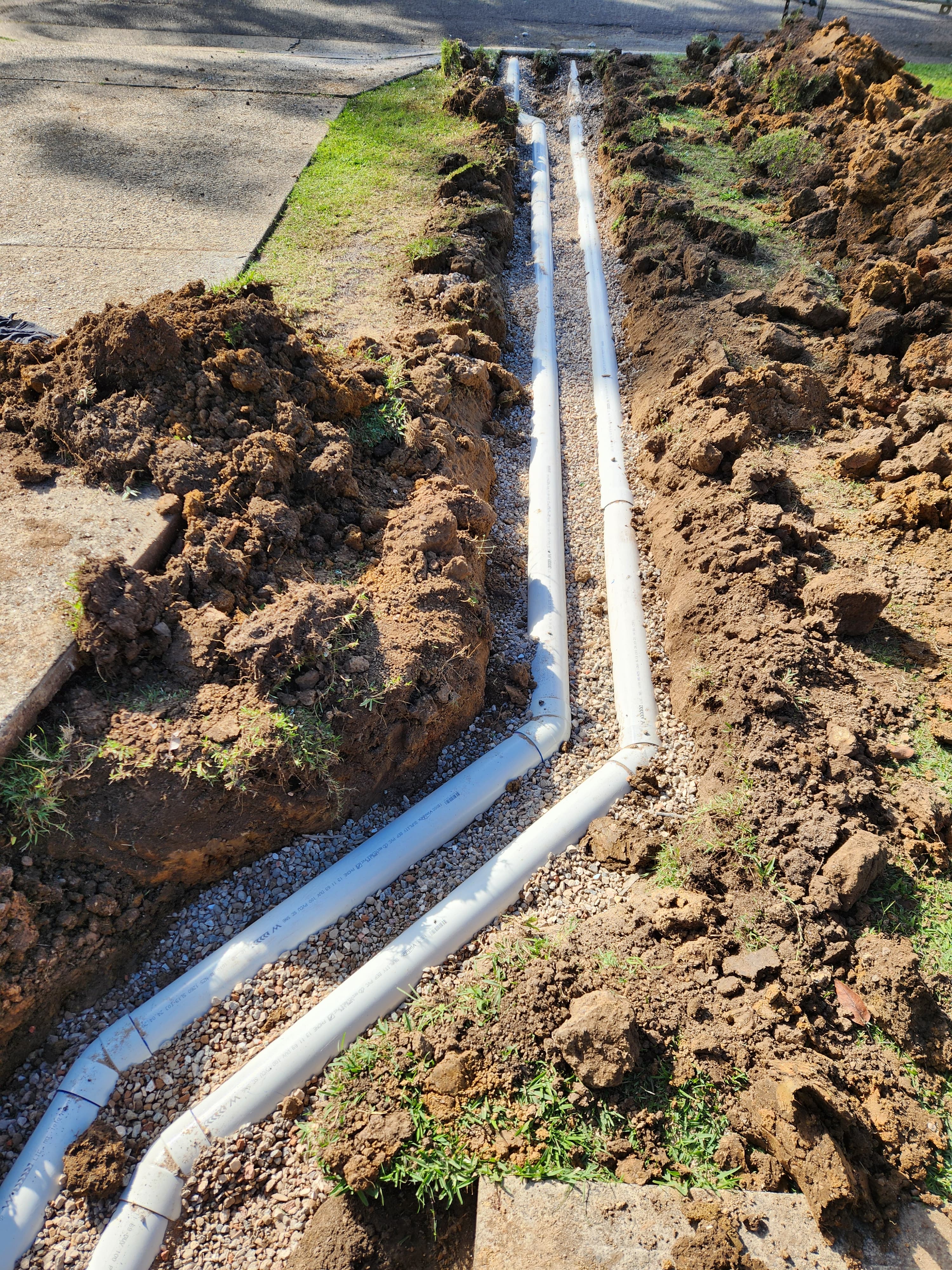
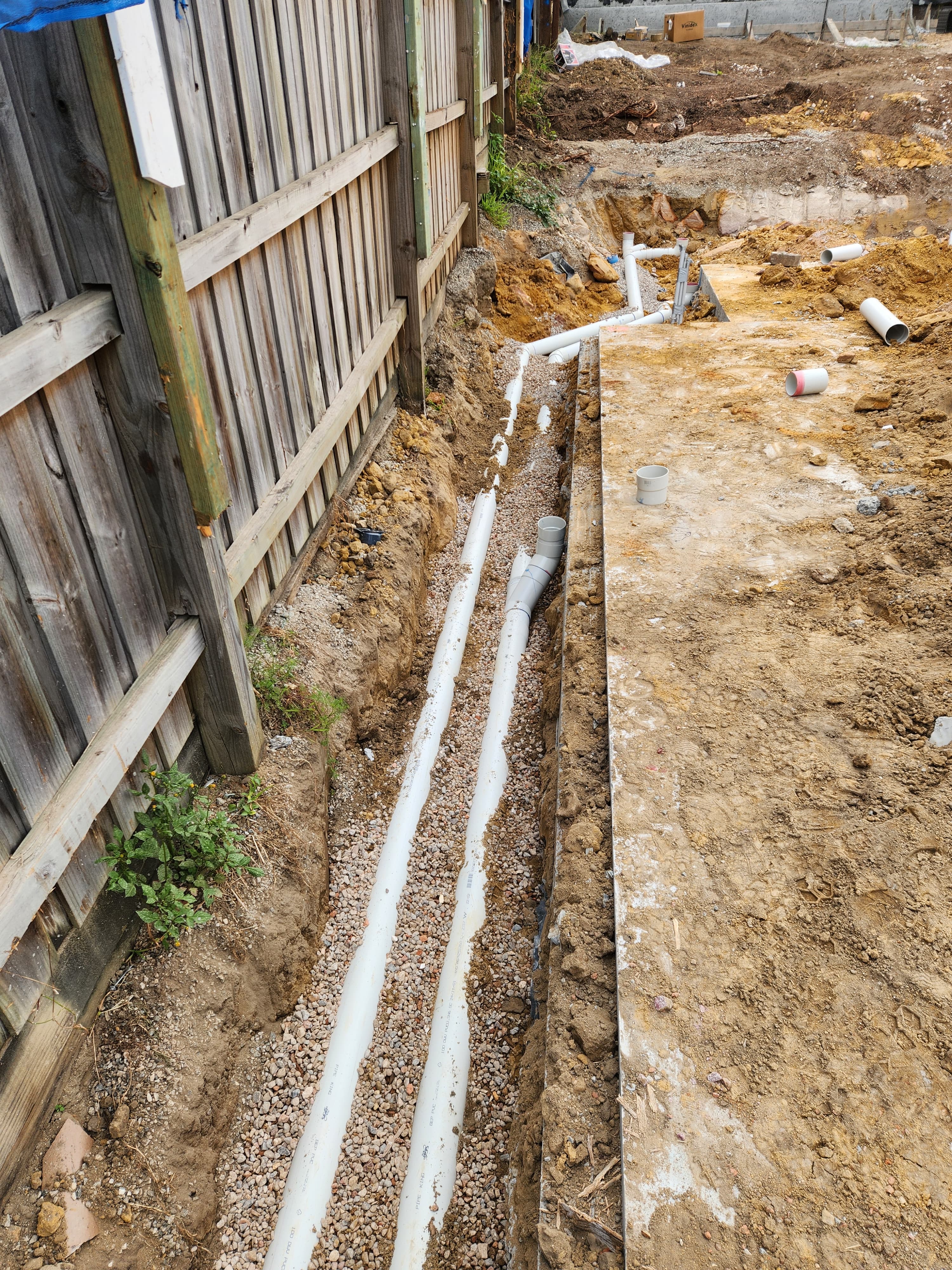
- Upgrade vulnerable pipes: If your home still has clay-jointed sewer pipes and you are experiencing recurring root problems, upgrading to PVC or relining is a permanent solution.
Aqua First Plumbing carries CCTV inspection equipment and hydro jetting on every service vehicle. We inspect, clear, and repair root-damaged drains across Castle Hill, Cherrybrook, Dural, Baulkham Hills, West Pennant Hills, Kellyville, and the wider Hills District.
If your drains are slowing down or you are dealing with recurring blockages, call us on 0412 441 244 for a CCTV inspection. Learn more about our blocked drain services.